Recent Posts

newswire

Friday, 23 September 2011

signs of an institutional run on French banks


Christine Lagarde, the managing director of the International Monetary Fund, urged Europe's leaders to bail out their fragile banks, as the boss of the eurozone's biggest bank, BNP Paribas, rejected fears that the financial sector was "in peril". Addressing journalists in Washington at the opening of the IMF's annual meeting, Lagarde said that Europe must tackle "this twin problem of sovereign debt and the need to strengthen capital buffers". She said: "It is critical that to fuel growth, banks be in a position to finance the economy, to finance enterprises, to finance households, to finance local governments. To do that they need to have the balance sheet that will actually support credit to the economy." Despite the recent stress tests carried out by the European Banking Authority, which suggested that most of the banks were well-placed to cope with the sovereign debt crisis, the IMF estimates that banks have taken a €300bn (£260bn) hit in the past year as a result of the growing risk of default by Greece and other vulnerable eurozone countries. Lagarde's call came as Baudouin Prot, BNP's chief executive, emphatically denied reports that it was in talks with Middle Eastern investors about securing a capital injection. "I formally deny this," he said. "We have no particular contact because we don't need a capital increase." But French bank shares – which have lost 50% of their value in three months – continued to fall as markets endured one of their worst trading days since 2009. BNP was off more than 5% and close rival Société Générale fell almost 10%. In the UK, bailed-out Lloyds Banking Group was down more than 10%, bearing the brunt of anxiety about a slowdown in economic growth. The FTSE 100 closed down 4.7% with large falls from mining companies, which make up a large part of the index and whose fortunes are closely tied to global economic prospects. Out of the 100 stocks, only technology company Autonomy – supported by a bid from Hewlett-Packard – fell by less than 1%. A survey from the crucial manufacturing sector, which chancellor George Osborne had hoped would lead an economic recovery, exacerbated the nervous mood by suggesting industry had been hit hard by the collapse of confidence around the world. The CBI's monthly industrial trades survey showed declining orders, both at home and abroad, and a rising backlog of finished goods, in the latest evidence that the recovery has stalled. Minutes from the latest meeting of the Bank of England's monetary policy committee revealed on Wednesday policymakers were preparing a new round of quantitative easing to respond to the worsening outlook. The gloom was echoed in the eurozone, where the early, "flash estimates" from the closely watched purchasing managers surveys signalled a sharp downturn in both manufacturing and services growth, adding to fears that Europe could be heading for a new recession. The Greek government announced new austerity measures this week to persuade investors that it is committed to tackling its debts. But investors are still fretting about the potentially devastating impact of a default on the region's banks. BNP insisted on Thursday that it could maintain a core tier one ratio – an important measure of financial strength – of 9% by January 2013 even if it sustained losses through the eurozone crisis. But Mohamed El-Erian, boss of the world's biggest bond investor Pimco, warned in a blog on the FT's website that there were "signs of an institutional run on French banks".

Thursday, 22 September 2011

Europe leaves Bulgaria, Romania out in Schengen cold


Europe left Bulgaria and Romania out in the cold Thursday, when Finland and the Netherlands blocked their entry into the passport-free Schengen travel area. The Dutch and the Finns refused to let them in, at a meeting of EU interior ministers dogged by concerns about illegal migration, citing poor progress in the fight against corruption and organised crime. "Two member states today made it impossible for us to make a decision on Schengen enlargement," Polish Interior Minister Jerzy Miller, whose country holds the EU's rotating presidency, lamented after the talks. "This leads me to a rather sad conclusion regarding mutual trust among the member states," Miller added, saying Bulgaria and Romania were promised a place in Schengen when they joined the European Union in 2007. "Today the promise has been broken," he said, adding that Romania and Bulgaria had made "huge progress." But the Dutch and Finnish governments disagreed. "What we wanted to avoid was to take a decision today that we would later regret," said Dutch Immigration Minister Gerd Leers. "Imagine you have a door with eight of the best locks in the world. But before that door is standing someone who lets everybody in -- then you have a problem," he said. The ministers did not vote, sending a decision to an EU summit in October, but the Dutch minister said his government was unlikely to change its mind. Schengen's enlargement requires unanimous consent. Poland sought to convince EU peers to accept a two-step solution that would allow Romanian and Bulgarian air and sea borders to open by October 31, while a date on opening land borders would be put off to next year. All nations backed the compromise except for the two opponents, diplomats said. "We don't have complete confidence that these countries will be able to secure outer EU borders because of corruption, among other issues," said Finnish Interior Minister Paeivi Raesaenen. Bulgarian Interior Minister Tsvetan Tsvetanov told national radio that Finland and the Netherlands "presented abstract arguments" against the bids and were "isolated compared to other EU members." Schengen, an area stretching from Portugal to Poland, through which road, rail and even air travellers need only basic identity papers to move freely, has come under growing strain this year over fears about illegal migration. Greece's struggle to police its porous border with Turkey, fears that the Arab revolutions could unleash a wave of boatpeople, and rising populism in some nations have sparked calls for a shake-up of the whole system. Romania has accused the Dutch centre-right government of being held hostage to the far-right. The Dutch centre-right government rules with the backing of Geert Wilders' far-right Freedom Party (PVV). In Finland, the far-right True Finns made major gains in recent elections. After the Dutch indicated their likely stance in advance of Thursday's talks, Romanian border authorities this week blocked Dutch trucks carrying tulips from the Netherlands -- officially over a bacteria scare. Romanian daily Adevarul linked the move to the Schengen dispute, calling it the "war of the flowers." The trucks were finally allowed into Romania on Thursday.

French court fines women for wearing veils


France's fines on women for wearing the full-face covering niqab veil, imposed for the first time by a court on Thursday, are a "travesty of justice," Amnesty International says. Police have issued several on-the-spot fines since the ban came into force in April but the hearing saw the first two court-issued fines, and the Muslim women vowed to appeal their case all the way to the European Court of Human Rights. "This is a travesty of justice and a day of shame for France. These women are being punished for wearing what they want," Amnesty International's deputy director for Europe and Central Asia John Dalhuisen said in a statement. Advertisement: Story continues below "Instead of protecting women's rights, this ban violates their freedom of expression and religion." The court in the northern cheese-making town of Meaux ordered Hind Ahmas, 32, to pay a 120 ($A163) fine, while Najate Nait Ali, 36, was fined 80 euros. It did not order them to take a citizenship course, as the prosecutor had wanted. The women were arrested when they brought a birthday cake for local mayor and lawmaker Jean-Francois Cope, who is head of President Nicolas Sarkozy's right-wing UMP party that pushed through Europe's first anti-burqa law. France is not the only country to try to ban the Muslim full-face veil - Belgium and some Italian cities have similar laws, while other countries are planning to follow suit - so a European ruling could have broad effect. French officials estimate that only around 2,000 women, from a total Muslim population estimated at between four and six million, wear the full-face veils traditionally worn in parts of the Arab world and South Asia. Many Muslims and rights activists say the right-wing president is targeting one of France's most vulnerable groups to signal to anti-immigration voters that he shares their fear that Islam is a threat to French culture.

Muammar Gaddafi has fled Sabha


The National Transitional Council are investigating an unconfirmed report that Muammar Gaddafi has fled from Sabha, NTC spokesman reports.  NTC spokesman also states that Libyan government forces now control most of Sabha with small pockets of resistance from pro-Gaddafi snipers.

Spanish consumers have appetite for grass-fed lamb


Spanish consumers have rated English Quality Standard grass-fed lamb highly in blind taste tests carried out by Eblex. Consumers at three different Spanish locations with a tradition of high lamb consumption rated English lamb equally to Spanish lamb, with no clear preference between the two. It is hoped the research, carried out with 476 people in Catalunia, Aragon and Extremadura, will encourage more Spanish buyers to consider fast-growing breeds of lamb reared on rain-fed pastures, which they have traditionally shunned out of a perception that it has too strong a taste compared to their milder, grain-fed domestically produced lamb. Jean-Pierre Garnier, Eblex head of export services, said: “Traditionally, we have faced a wall with some Mediterranean countries, particularly in Spain, who believe the lamb produced in northern Europe is not to the liking of their palate. They have a preference for their own grain-fed lamb.   “This has been a real barrier to trade, but something we felt was based on historic perception rather than people actually tasting the difference, so we put this to the test.” Consumers were asked to rate the lamb on tenderness, juiciness, flavour and overall acceptability. A small majority (51%) of the tasters in Catalonia and Aragon preferred the English lamb, while a small majority in Extremadura (58%) preferred the Spanish lamb, suggesting that there was no real preference between the two. “This really does show that the Spanish consumer has an appetite for grass-fed lamb and we hope this will encourage more Spanish importers to look to buy from countries like England that use this system,” added Garnier.

Scottish supermarkets face extra tax on selling alcohol


Plans to hike business rates for major retailers of alcohol and tobacco in Scotland could see supermarkets pay around £110 million in tax over the next three years.   Finance Secretary John Swinney announced the new levy yesterday, as part of the Scottish government’s Spending Review.   Swinney said the review contained “tough choices, because of the cuts from Westminster that go too far, too fast”.   “We have had to restrict pay costs, reluctantly implement pensions increases on public sector staff, and maximise the income gained from asset sales,” he said.   He outlined that part of the extra revenue brought in would come from a tax on major retailers who sell alcohol and tobacco.   The measure was a surprise announcement, as during the last parliament a proposal to introduce a “Tesco tax” was voted down and it was not included the SNP’s manifesto.   Scottish Retail Consortium director Ian Shearer said: “This new tax is a blatant fund-raising exercise which is illogical and discriminatory. It targets a part of the retail sector which funds Drinkaware, rigorously prevents under-age sales with Challenge 25 and has led the way on clear alcohol labelling, giving it an exemplary record on the sale of alcohol and tobacco.   “Supermarket margins are already cut to the bone as stores compete to offer the best deals to cash-strapped consumers. The UK already has some of the highest alcohol taxes in Europe. This tax would make it harder for food retailers to keep prices down for customers, and makes Scotland a less attractive place to do business, invest and create jobs.”   The WSTA's Jeremy Beadles said he was "disappointed" the meaure had been announced with no consultation.   "The tax on large retailers will place an additional burden on Scottish businesses and push the price up for all consumers regardless of whether they consume alcohol at all,” he added.   “At a time of financial constraint, when many businesses in Scotland are already feeling the pinch and paying increase rates, we do not believe that punishing responsible consumers in Scotland with another tax is either fair or justified.”     Minimum alcohol unit pricing could become as reality north of the border by next summer, although the price has not yet been set. The Scottish government claims it is the “most effective and efficient way” of reducing consumption and alcohol related harm.

Bloody Sunday family rejects payout


Relatives of one of the Bloody Sunday victims have firmly rejected any offer of Government compensation. Sisters Linda and Kate Nash, whose teenage brother William was among 14 men who died after paratroopers opened fire on civil rights protesters in Londonderry in January 1972, said: "I find it repulsive." The Ministry of Defence has confirmed that moves are under way to compensate the families following representation from solicitors acting on behalf of some of the relatives. The Nash sisters said they would not take money for personal financial gain: "Not under any circumstances will I ever accept money for the loss of my brother. "I find it repulsive, taking anything from the MoD. If the MoD wants to set up bursaries they can, but not in my brother's name," Ms Nash said. Prime Minister David Cameron has already apologised to victims and said the shootings were wrong. An MOD spokesman said: "We acknowledge the pain felt by these families for nearly 40 years, and that members of the armed forces acted wrongly. For that, the Government is deeply sorry. We are in contact with the families' solicitors and where there is a legal liability to pay compensation, we will do so." Lord Saville drew up a landmark report last year which criticised the Army over the killings. His panel ruled that the Army fired first and without provocation. It found that all 14 who died and the others who were injured almost four decades ago were unarmed and completely innocent. The MoD's move followed a letter sent to the Prime Minister by solicitors for the families, asking what he was going to do about Bloody Sunday. He described the killings as unjustified and unjustifiable. Defining who would be eligible for compensation could be complicated as many immediate family members are already dead. Relatives received a small payment worth a few hundred pounds from the MOD, without admitting liability, shortly after the event.

Wednesday, 21 September 2011

Manchester airport reopens after bomb scare


Manchester Airport’s main terminal has reopened after bomb disposal experts were called in to check a suspicious package on Wednesday, police said. A man was being questioned, although police said earlier reports that he was being held under the Terrorism Act were inaccurate. The package, a bag, was found to be safe. The airport’s operators had earlier said 11 flights leaving Terminal 1 would be affected. Incoming flights are operating normally and the airport’s two other terminals remained open. Manchester Airport is Britain’s fourth biggest and handles around 20 million passengers each year.

IMF cuts growth forecast for UK for 2011 and 2012


The International Monetary Fund has cut its growth forecasts for the UK, in a report warning that the global economy is in a "dangerous new phase". UK gross domestic product is predicted to grow 1.1% in 2011, down from the 1.5% forecast in the IMF's previous World Economic Outlook report in June. The growth forecast for 2012 has been slashed from 2.3% to 1.6%. Foreign Secretary William Hague said the UK had the "discipline and determination" to tackle its deficit. But shadow chancellor Ed Balls called them "deeply concerning forecasts for both the UK and world economy". Independent economists are currently forecasting average UK growth of 1.3% in 2011, slower than the IMF, and 2% in 2012, ahead of the IMF figure. The IMF's UK forecast for 2011 falls behind projections for Germany, France, the US and Canada. Germany is forecast to grow 2.7% in 2011 while France is expected to show 1.7% growth. The US should advance 1.5% and Canada 2.1%. However, UK growth in 2012 should surpass both Germany and France, whose forecasts have been cut to 1.3% and 1.4% respectively. A spokesman for the Treasury said the Government remains committed to its deficit cutting plan. He said: "It is welcome that the IMF have forecast that the UK will grow more strongly than Germany, France and the euro-zone next year. "But it is clear that the UK is not immune to what is going on in our biggest export markets, with every major economy seeing lower forecasts for growth this year and next. "The Government remains committed to implementing the deficit reduction plan which has delivered stability, a policy stance that Christine Lagarde described as 'appropriate' earlier this month." Mrs Lagarde, head of the IMF, said the UK's budget deficit stance remained "appropriate" but "the heightened risk" meant a need for a "heightened readiness to respond".

Debt Crisis Infects Companies via Bank Loan Costs


Banks in Spain and Italy are curbing loans and charging customers more as aftershocks from the sovereign debt crisis drive their own borrowing cost higher. “They can’t lend what they don’t have, I suppose,” said Francesc Elias, the owner of Bomba Elias, a pumps and filters maker near Barcelona, which shelved a 100,000-euro ($144,000) plan to open a Bahrain office when it couldn’t get an affordable bank loan. “The banks are very clever about finding new ways to charge us more.” Spanish and Italian government bond yields surged to euro- era records this quarter as Greece struggled to avoid default, driving the cost of insuring against nonpayment by the region’s banks to a record and making it harder for them to sell bonds. Spain pays 5.35 percent for 10-year money, up from an average of 4.07 percent in the first half of 2010, while Italy pays 5.65 percent compared with a 4.05 percent average last year. As a result, banks such as Banco Santander SA, Spain’s biggest lender, are passing higher funding costs on to their customers. Santander’s return on Spanish loans rose to 3.63 percent in June from 3.37 percent in December, as the yield it pays on deposits fell to 1.32 percent from 1.54 percent. UniCredit SpA, Italy’s biggest lender, said on Aug. 3 it’s being more selective about who it lends to and levying higher rates. One out of three companies asking for credit in the second quarter period didn’t get it or obtained less than they asked for, according to Confcommercio, an Italian retailers’ lobby group. ‘Increasingly Stringent’ “The cost of financing our current activities has increased significantly,” said Riccardo Illy, chairman of Italian coffee maker Gruppo Illy SpA. “We don’t have any problems accessing credit because we’re large enough, but we know many businesses that are having trouble because banks’ requirements have become increasingly stringent.” Spanish banks including Santander and Bankia SA are shrinking their loan books after being pummeled by a collapse in credit demand for real-estate and surging loan defaults. Santander’s Spanish lending shrank an annual 7 percent through June, mirroring a trend in the Bank of Spain’s data that show a 1.9 percent annual drop in lending to companies and individuals. Lending at Bankia, the third-biggest lender formed from a merger of seven savings banks, was down 2.3 percent from December. The average interest rate on new company loans of as much as 1 million euros rose to 4.70 percent in July from 4.57 percent in June and 3.88 percent in December, according to the Bank of Spain. Companies took out 15.9 billion euros of those loans in July, down from 18.7 billion euros in the same month a year ago and 39.2 billion euros in July 2007, according to the central bank. ‘The Bottom Line’ “In our case, it’s not so much the issue of access to credit that’s the problem, it’s the fact that it costs more,” said Luis Zapatero, chairman of Bodegas Riojanas, a Spanish winemaker, which needs to finance putting wine aside to create reserve vintages that may not go on sale until several years after bottling. “Our financial costs have increased 15 percent and that goes straight to the bottom line.” Banks face a dilemma when trying to pass on increased funding costs in full because they risk driving more borrowers into default, said Barclays Capital’s Pascual. Bad loans in the Spanish banking system are near 7 percent of total lending, the highest since 1995. Increased Caution “Banks are more cautious in giving long-term loans because it has become more difficult to transfer increasing funding costs to customers,” said Giovanni Bossi, chief executive officer of Banca Ifis SpA, an Italian bank specializing in short-term loans to companies. As lending slides in Spain and banks struggle to finance themselves, the outlook for growth is worsening, said Antonio Ramirez, an analyst at Keefe Bruyette & Woods in London. Prime Minister Jose Luis Rodriguez Zapatero said Sept. 14 that Spain might miss its 1.3 percent growth target this year because of the “situation of financial tension and economic uncertainty, mainly because of Greece.” Banks, meantime, are struggling to sell bonds. The last benchmark-sized issue of 1 billion euros or more of debt by a Spanish bank was a sale of public-sector covered bonds by Santander in June. UniCredit paid a record spread for Italian covered bonds when it raised 1 billion euros from a sale of 10- year notes that yielded 215 basis points more than the benchmark mid-swap rate. ‘Negative Feedback Loop’ “It’s the negative feedback loop between what’s happening to the sovereign and the effect on banks and the economy,” said Antonio Garcia Pascual, chief southern European economist at Barclays Capital in London. “To a large extent, the problems facing Spanish lenders also apply to Italy.” As financing costs rise in Italy, analysts have started revising down their growth estimates for that country. Nomura International Plc economists revised their Italian gross domestic product growth estimate for 2012 last month to 0.5 percent from 0.8 percent previously. “The increased financial costs will become more evident in the dynamics of the economy,” said Giada Giani, an economist at Citigroup Inc. in London. “I definitely think that the deterioration of financial conditions is a key factor in the macro-economic picture.” A survey by Spain’s national statistics institute published in May showed that one in every four companies that sought loans in 2010 failed in the attempt, compared with 10 percent in 2007. Half of the companies surveyed said they’d been able to line up the credit needed, compared with 80 percent in 2007, according to the survey. Meanwhile, Spanish banks are also demanding higher fees from customers, Bank of Spain data show. The average six-month charge for a retail customer current account jumped 15 percent to 25.80 euros at the end of August from 22.36 euros in December, according to the regulator. “There’s a double effect because commissions have also increased dramatically,” said Elias, the owner of the pumps and filter maker, who has cut his workforce to 12 from 20 in the past year. “It affects any kind of investment plan.”

Turner Says Murdoch 'Going to Have to Step Down' From News Corp.


Billionaire Ted Turner said News Corp. Chairman and Chief Executive Officer Rupert Murdoch will probably have to leave the helm of his media company after a phone-hacking scandal that began at one of its newspapers. "I think he's going to have to step down," Turner, 72, said in an interview on Bloomberg Television. "He hadn't survived anything like this. This is serious." News Corp., based in New York, has come under fire this year over allegations its News of the World tabloid hacked into the voice mails of murder victims and paid police for stories. The public outcry forced the company to close the 168-year-old London newspaper and drop its 7.8 billion-pound ($12.2 billion) bid for full control of British Sky Broadcasting Group Plc. Murdoch and his son James, deputy chief operating officer at News Corp., were called before U.K. parliament in July to answer questions about the scandal. The elder Murdoch's statements that he didn't know about phone-hacking or police payments aren't sufficient, Turner said. "Well, he should have known," said Turner, who sold his Atlanta-based Turner Broadcasting, owner of CNN, TBS and the Cartoon Network, to Time Warner Inc. in 1996. "He was chairman of the board. He's responsible. I took responsibility when I ran my company. You never heard me say, 'Well, I didn't know.'"

Tuesday, 20 September 2011

Scotland Yard drops Official Secrets Act bid against Guardian


Scotland Yard had intended to take the Guardian newspaper to court on Friday in an attempt to force the newspaper into revealing how it obtained information that missing schoolgirl Milly Dowler’s mobile phone had been hacked. However, following discussions with the Crown Prosecution Service (CPS), the force has abandoned its application for production orders against the newspaper. The decision comes following heavy criticism of the force’s attempt to make the Guardian, and one of its journalists, hand over information which would have revealed the source of many of the newspaper’s phone hacking stories. Various MPs, including the shadow culture secretary Ivan Lewis, questioned the Yard’s attempt. While many national newspapers carried leading articles condemning the Metropolitan Police’s apparent attack on press freedom. And today the former Attorney General Lord Goldsmith told the Daily Telegraph that the force’s decision to invoke the Official Secrets Act was “unusual” and could threaten press freedom.

Gadhafi spotted as rebels capture parts of south Libya town


Fugitive Libyan leader Muammar Gadhafi was spotted in the southern city of Sabha a few days ago, the regional daily Asharq al-Awsat reported on Tuesday, citing an eyewitness. The witness claimed that Gadhafi was living in the city, located around 750 kilometers south of the capital Tripoli. Anti-Gadhafi fighters firing a cannon near Sirte, the hometown of deposed leader Muammar Gadhafi, September 17, 2011. Photo by: Reuters Gadhafi's whereabouts have been unknown since rebels took over Tripoli in August. However, he continues to send statements and voice messages through the Syria-based al-Rai channel. The report comes after the anti-Gadhafi rebels said they took over parts of Sabha city as well as its airport. "The airport of Sabha has been liberated by our fighters," a military spokesman, Colonel Ahmed Bani, said in Tripoli on Monday. "Also two villages near Sabha have been liberated." For around a week the rebels have been fighting pro-Gadhafi fighters, who have put up stiff resistance in his birthplace of Sirte and the desert town of Bani Walid, south-east of Tripoli. Almost a month after they overran Tripoli, the rebels are at pains to take control of the two strongholds before their leaders can declare all of the North African country "liberated."

Charlie Sheen to pocket $25 million from settlement over ‘Men’ firing

Charlie Sheen to pocket $25 million from settlement over ‘Men’ firing   	Washington: Looks like Charlie Sheen is close to settling his 100-million-dollars legal dispute with Warner Bros. over his firing from the hit sitcom ‘Two and a Half Men’.


A person familiar with the talks, has revealed that the studio is wrapping up a deal to end the litigation.

According to The Los Angeles Times, Sheen is expected to receive about 25 million dollars from the Hollywood studio. The figure represents Sheen’s participation in profits from the show.

Meanwhile, a spokesman for Warner Bros. denied there is a settlement and declined to comment further. 


NAVY recruit flipped and killed an officer in a gun rampage on a nuclear sub after he was told off for his cleaning work.

Ryan Donovan, 23, fired his SA80 semi-automatic rifle after his hopes of a voyage on a surface ship were dashed as punishment for his shoddy work.

He was also obsessed with violent video games and told a friend he wanted to carry out a Grand Theft Auto-style "kill frenzy".

Yesterday the HMS Astute able seaman was jailed for life by a judge who heard he opened fire on two superiors he blamed — only to miss.


Victim ... Ian Molyneux with wife Gill
Victim ... Ian Molyneux 
with wife Gill


The shots were heard by Lieutenant Commander Ian Molyneux, 36, who rushed to tackle him during a goodwill visit by the sub to Southampton in April.

Donovan murdered him with a bullet to the head, then stepped over his body to the control room.

There he wounded Lt Cdr Christopher Hodge, 45, in the stomach before being wrestled to the ground by Southampton council leader Royston Smith and chief executive Alistair Neill — who were touring the sub.

Three days earlier Donovan of Dartford, Kent, disobeyed a direct order to clean a section of the sub after it failed inspections, Winchester Crown Court heard.


Hero ... Royston Smith, right, on sub visit


Gangsta rap fan Donovan — who called himself Reggie Moondog — told a fellow sailor hours before his rampage: "I'm going to kill somebody. I'm not f****** kidding, and then watch the news."

He admitted murder and attempted murder and was caged for a minimum of 25 years. The widow of the dead officer — a dad of four — wept just feet away.

Outside court Gill Molyneux paid tribute to her Weapons Engineer Officer husband, describing him as "my hero and true love".


Clegg condemns 'grotesque' hacking


No amount of money can absolve News International from hacking in to the phone of Surrey murder victim Milly Dowler, Liberal Democrat leader Nick Clegg has said , following the disclosure that the company was about to settle its case with the teenager's family. Rupert Murdoch is set to donate £1 million to charity from his own pocket, while the Dowlers themselves will receive in the region of £2 million in a separate payout from News International, the publishers of the now-closed News of the World. The company has confirmed it is in "advanced negotiations" with relatives of the 13-year-old, who was abducted and killed by Levi Bellfield in 2002. On Tuesday Mr Clegg said no amount of money could absolve the company for what happened. He said: "It is not for me to decide what money News International offer the Dowlers. I think it is very, very important we now give the Dowler family the time and space they need to rebuild their lives and move on. "I think the reason why people were so outraged by the invasion of the privacy of the Dowler family is that they weren't celebrities, they weren't politicians, they hadn't asked to be put on the front page of the nation's newspapers. I have met them and they are a lovely, strong, every-day family who lost their daughter and were dealing with that terrible tragedy and even then these journalists - it's just grotesque - were invading their privacy. "In a sense I think, and I am sure the Dowlers feel the same, that no amount of money can absolve people for what they did." News International is reported to have set aside £20 million for payments to phone hacking victims, but a source said the size of the expected compensation for the Dowlers reflected the "wholly exceptional circumstances" of their case. Sources close to the Dowlers have said any agreement will feature a donation to charity. It is not yet known which cause, or causes, would benefit. A News International spokesman said: "News International confirms it is in advanced negotiations with the Dowler family regarding their compensation settlement. No final agreement has yet been reached, but we hope to conclude the discussions as quickly as possible."

Monday, 19 September 2011

Iran arrests six 'BBC Persian film-makers'


The Iranian authorities have arrested a group of film-makers and accused them of working for the BBC Persian service, which is banned in the country. State TV reports that the group of six were paid to make secret reports for the Farsi-language service. The BBC says no-one works for the Persian service inside the country - either formally or informally. The arrests came a day after the service showed a documentary on Iran's Supreme Leader Ayatollah Khamenei. The BBC's James Reynolds says the channel's signal, which is sometimes accessible inside Iran, was disrupted during the broadcast. Increasing pressure The corporation said the documentary on the ayatollah was an in-house production and none of the six film-makers had been involved with it. "The individuals in question are independent documentary film-makers whose films have been screened in festivals and other venues internationally," said the statement. "As is common practice for the channel's documentary showcase programme, BBC Persian television bought the rights to broadcast these films." The BBC's language service chief Liliane Landor said BBC Persian had done nothing unusual in buying the rights to independent films. She said the arrests were part of the "ongoing efforts by the Iranian government to put pressure on the BBC" to influence its impartial and balanced coverage of its Farsi-language TV broadcasts. The corporation said BBC Persian has been subject to increasing and aggressive jamming from within Iran. The channel has suffered deliberate attempts to interfere with its signal intermittently since its launch in 2009.

UK Home Office considering gender-neutral passports


The Home Office has said it is considering the possibility of not displaying gender on passports. The proposals follow changes to Australian passport rules, which mean that intersex people who identify as neither gender can be listed as ‘X’, rather than having to choose between male or female. A Home Office spokesman said: “We are exploring with international partners and relevant stakeholders the security implications of gender not being displayed on the passport.” Currently, transgender people can obtain passports in their new gender. But intersex people – those born with chromosomal or genital ambiguity – must pick whether they are male or female. Supporters of gender-neutral passports say there is little need for passports to list gender and argue that other forms of ID do not state the information. Intersex rights campaigner Jennie Kermode told PinkNews.co.uk last week that the change would be easy to implement. She said: “The passport offices in the UK will not issue passports with the ‘X’ option now, although they could do so without, as I understand it, any necessary change in UK laws.” Another campaigner, Jane Fae, said: “The issue of documenting gender goes much wider than the ‘feelings of trans and intersect people’. In fact many in the trans community would oppose the removal of gender as its inclusion on passports is vital to ensure safety when travelling abroad. “Many non-trans individuals would be happier not declaring gender for all sorts of reasons. It should be optional for all.”

Ms Moran, 56, looked a shadow of her former self as she arrived to face 21 charges at Westminster Magistrates’ Court in central London.


One count alleges that she falsely claimed £22,500 for dry rot on a home in Southampton more than 100 miles from her constituency.

The former Labour member for Luton South sobbed throughout the brief hearing and was passed a tissue by a court official.

No plea was entered and jurisdiction in the case was declined by District Judge Daphne Wickham on the grounds of the nature and complexity of the charges and sums involved.

They allegations consist of 15 counts of false accounting and six of forgery.

Moran, of Ivy Road, St Denys, Southampton, was remanded on unconditional bail to appear at London’s Southwark Crown Court on October 28 for a plea and case management hearing.

The former politician spoke only briefly, in a faltering voice, to confirm her name and date of birth.

Moran looked almost unrecognisable as she arrived at court this morning with a dark grey beret over her head, wearing glasses, and clutching a handkerchief to her mouth.

The auburn tresses and bright clothes seen in previous photographs were replaced by a sober dark suit and blonde hair.

In court she continued to sob into a handkerchief as she waited for the hearing to start.

The criminal probe into Moran began after an investigation by The Daily Telegraph.


Margaret Moran in May 2009 and arriving at Westminster Magistrates Court today (PA/NICHOLAS RAZZELL)

Six held in major anti-terror probe


Six men have been arrested in connection with one of the most significant intelligence-led counter-terrorism operations this year. The men were detained at or near their homes in Birmingham on suspicion of the commission, preparation or instigation of an act of terrorism in the UK following a joint investigation by both police and MI5. It is understood the investigation relates to suspected Islamist extremism, but it is not thought that an attack or threat was imminent. A seventh person, a 22-year-old woman, was arrested on suspicion of failing to disclose information contrary to the Terrorism Act 2000, police said. West Midlands Police said the "large-scale operation" had been running for some time and had been subject to regular review, adding that the action was necessary "in order to ensure public safety".

Dale Farm residents celebrate court victory


Dale Farm residents have won a last-gasp injunction restraining Basildon Council from clearing structures from the site pending a further hearing at London's High Court on Friday. Mr Justice Edwards-Stuart granted the order at London's High Court on the basis that there was a realistic apprehension that the measures to be taken - while genuinely believed in by the council - "may go further" than the terms of the enforcement notices. Travellers and their supporters had barricaded themselves behind newly built brick walls and chained themselves to fences as officials prepare to evict them from an illegal site in southeast England at the end of a decade-long battle. Supporter Jake Fulton said: "This is really great news but this isn't over yet. It makes us feel we have a really good shot at defending travellers in a way that has never happened before." The showdown between the bailiffs, travellers and a variety of protest groups who have joined their cause marks the climax of one of Britain's most contentious and bitter planning rows in recent years. Basildon Council said last-ditch talks had broken down on Monday morning after the travellers asked for the eviction to be delayed until November 22.

Milly Dowler's family have been offered a multimillion-pound settlement offer by Rupert Murdoch's News International,

Milly Dowler
Phone hacking: Milly Dowler's family are understood to have been offered a seven-figure settlement. Photograph: Surrey Police/PA

Milly Dowler's family have been offered a multimillion-pound settlement offer by Rupert Murdoch's News International, in an attempt to settle the phone-hacking case that led to closure of the News of the World and the resignation of the company's chief executive, Rebekah Brooks.

It is understood that News International has made a settlement offer estimated by sources at close to £3m, a figure that include a £1m donation to charity. But the publisher has not yet reached agreement with the Dowler family, whose lawyers were thought to be seeking a settlement figure of closer to £3.5m.

The seven-figure sums under negotiation are far larger than other phone-hacking settlements reached, reflecting the fact that the phone-hacking case affected a family who were victims of crime. Thirteen-year-old Dowler went missing in March 2002 and was later found murdered.

It emerged in July that Milly Dowler's mobile phone had been hacked after her death. Voicemails were accessed on behalf of the News of the World, and messages left for her were deleted to make room for more recordings. This gave the family false hope that she was still alive, because messages were disappearing.

On Monday afternoon there was growing speculation that a deal is close, although other sources familiar with the negotiations indicated that there are still enough matters unresolved to mean that an agreement in principle had not yet been reached behind the scenes.

Sienna Miller accepted £100,000 from News International after the publisher accepted unconditional liability for her phone-hacking and other privacy and harassment claims in May. A month later Andy Gray accepted £20,000 in damages plus undisclosed costs.

Other lawyers bringing phone-hacking cases are privately indicated that they would be advising many of those bringing actions to try and reach a settlement rather than take their cases to lengthy and expensive trials. A handful of cases have been taken forward as lead actions by Mr Justice Vos, to establish a benchmark for settlements in future lawsuits.

Murdoch met with the Dowler family in July, shortly after the original story about hacking into her phone broke, making what the family's lawyer, Mark Lewis, said was a "full and humble" apology. The News Corporation chairman and chief executive "held his head in his hands" and repeatedly told the family he was "very, very sorry".

Marbella Club Hotel, Golf Resort & Spa: Marbella, Spain hotel:


Located on the Southern Spanish Costa del Sol, in the heart of the 'Golden Mile' only 5 minutes to Old Town Marbella and Puerto Banús, with 320 days of sunshine and a mild year round average temperature of 21ºC). Open year round, the renowned Marbella Club Hotel, was once the private residence of Prince Alfonso von Hohenlohe. The 121 luxury bedrooms and suites, spread over the beach front resort, harmonize with 14 Andalusian-Style villas throughout 42,000 square meters (452,083 sq. ft.) of lush subtropical gardens. Each guest room is decorated with the finest fabrics and Mediterranean interior design, reflecting the surrounding elements and has furnished balcony / terrace and spacious luxurious bathrooms with separate shower and bath. The 14 charming villas are in the unmistakable style of the Hotel, faithful replicas of traditional Andalucían architecture, blending harmoniously with their surroundings, and are ideal for families and guests seeking to enjoy more space and privacy. The 2, 3 or 5 bedroom villas have their own private garden and heated pool, providing guests with both comfort and privacy during their stay. Both of the 2 outdoor heated swimming pools, one with seawater invite you to relax in the surrounding gardens or to enjoy the views of the Mediterranean through the palm trees of the famous beach club.

Housing Market Woes Even Hit Celebs


Even celebrities are having a hard time selling their mega-mansions. More on DIS Fan Cam: The Next Sports Cash Machine?Jay Rasulo, Senior Executive Vice President And Chief Financial Officer, The Walt Disney Company, To Speak At The Goldman Sachs 20th Annual Communacopia ConferenceBond Funds See Huge Spike in Inflows Market Activity The Walt Disney Co| DIS Mommy-to-be Hillary Duff has put her first mansion that she purchased while starring in Disney's Lizzie McGuire up for sale with an asking price of $6.25 million. But according to The Real Estalker, Duff also attempted to sell the estate last year, listing for $7 million last time around. Real estate records reveal Duff bought the 9,277 square-foot house in Toluca Lake, Calif., in March 2004 for $3.5 million. Mark Wahlberg, a.k.a. Marky Mark, also recently re-listed his Beverly Hills estate with a $2 million price cut. Wahlberg originally listed the property in 2008 for $15.9 million. The 1.41-acre home is now listed for $13.9 million. The executive producer of Entourage purchased the mansion in 2001 for just $5 million, later remodeling it. Earlier in the summer, Christina Aguilera reduced the price on her home in the Hollywood Hills to $5.5 million from $8 million, while Jodi Foster's Beverly Hills mansion was brought down to $8.9 million from $10 million. The housing market continues to wobble with few consumers taking advantage of record-low mortgage rates. Sales of newly built homes are expected to be at their worst levels for decades this year, while sales of previously occupied homes are on pace for their poorest showing in nearly 15 years

Two men took their friend's corpse on a night out with them to a strip club so they could use his ATM card to buy drinks

Two men took their friend's corpse on a night out with them to a strip club so they could use his ATM card to buy drinks, police claim.

Robert Jeffrey Young, 43, and Mark Rubinson, 25, discovered their friend Jeffrey Jarrett dead but delayed reporting the find to police so they could first have a free night out.

While keeping Mr Jarrett's body in their car, they stopped at a Mexican restaurant in Denver, used their friend's ATM card and withdrew $400 at a strip club before finally reporting him dead.

Jeffrey Jarrett? bought his roommate and a friend a round of drinks, Mexican food and a trip to strip club Shotgun Willie's the night of August 27, authorities say.

With friends like these: Robert Jeffrey Young, left, and Mark Rubinson allegedly delayed reporting the find to police so they could first have a free night out

The men, who are now free on bond, have been charged with abusing a corpse, identity theft and criminal impersonation.

It's unclear how Mr Jarrett died, but the men have not been charged with his death.

The bizarre scenario is reminiscent of the 1980s movie Weekend at Bernie's, in which two men discover their friend dead and maintain a façade that he's still alive while staying at his home for the weekend.

Boys night out: The men visited Shotgun Willie's strip club, pictured

Boys night out: The men visited Shotgun Willie's strip club, pictured

Strip off: The two men went to a strip club, using their dead friend's money

Strip off: The two men went to a strip club, using their dead friend's money

One of Mr Jarrett's relatives, who asked not to be named, told the Denver Post Mr Jarrett had invited Mr Young, a former college friend, to stay with him for a few months while he had money struggles.

It is thought that on August 27, Mr Young arrived home at about 11pm and found his friend unresponsive.


Rather than call authorities, however, he went to see Mr Rubinson at a restaurant where he works to tell him about the find.

The pair then went back to Mr Jarrett's home, loaded him into Mr Rubinson's car and took the body with them to Teddy T's bar and grill, where they drank on his tab while the body was hidden in the vehicle.

'Young stated ... that it was obvious Jarrett was dead while all three are at Teddy T's,' Denver Detective Ranjan Ford wrote in the affidavit.

Weekend at Bernie's: The allegations are similar to the premise of the 1980s movie

Weekend at Bernie's: The allegations are similar to the premise of the 1980s movie

The went on to eat at Mexican restaurant Viva Burrito and withdrew $400 on their dead friend's card at strip bar Shotgun Willie's, where they stayed until closing time.

Only then did the pair report their friend dead by flagging down a police officer at 4am.

'This is a bizarre and unfortunate crime,' Denver Police Department spokesman Sonny Jackson told the Denver Post. 

'This isn't anything you want to have happen to a loved one. You want them treated with respect in death.'

The relative of Mr Jarrett, a father who sold real estate, added: 'We just want to make sure they're prosecuted to the fullest extent of the law.'


Dale Farm Eviction: Clashes Expected Between Bailiffs And Residents As Eviction Begins


Hundreds of travellers have said they will barricade themselves inside the UK's biggest illegal camp as angry clashes are expected between bailiffs, residents and activists. Residents at Dale Farm in Basildon, Essex, and their supporters are set to be evicted after losing a decade-long legal fight over unauthorised development. Teams of bailiffs are expected at the former scrapyard's front gate to begin forcibly ejecting them. Essex Police and riot-trained colleagues from across the country are also expected, to ensure the eviction of some 50 homes is conducted peacefully. Half of the six-acre site, which has planning consent, will remain. As of this morning Basildon Council had not cut the electricity supply to the site. Residents had feared bailiffs would move in at first light. Supporters closed the gate after 11pm yesterday and built a barricade behind it and parked a van to block the way. Resident Mary McCarthy said: "I don't intend to go anywhere, I'm staying here. "I've faced constant evictions throughout my life and now I'm determined to stay put." Many residents have moved their caravans on to the neighbouring legal site. Activists have chained themselves to barricades at the site, including one who is chained by the neck. They have told Sky News they would not be leaving unless they were forced out. ACTIVIST: WE WILL DO ALL WE CAN TO STOP EVICTION Marie McCarthy, a resident at the site, told Sky News it was "a big scrapyard that is of no use to anyone else". "The Government is not going to ruin our culture," she said. "This is the way we want to live. "Why should we be run off our land? We never knew we were breaking the law - we thought this was a good thing to do because we stopped going onto people's grounds." Activists Dean, 29, and Emma, 18, have handcuffed themselves to a pole concreted inside a barrel. Lying on mattresses, the pair said they were prepared to stay as "long as it takes". The children of Dale Farm hold pictures of themselves up in protest The families have constantly evaded eviction and claim they have nowhere else to go. They insist that their human rights are being breached. Their supporters include the United Nations and Amnesty International. But last month a High Court judge backed Basildon council and local residents and ruled that the eviction must go ahead.

Sunday, 18 September 2011

Tony Blair 'visited Libya to lobby for JP Morgan'


A senior executive with the Libyan Investment Authority, the $70 billion fund used to invest the country's oil money abroad, said Mr Blair was one of three prominent western businessmen who regularly dealt with Saif al-Islam Gaddafi, son of the former leader. Saif al-Islam and his close aides oversaw the activities of the fund, and often directed its officials on where they should make its investments, he said. The executive, speaking on condition of anonymity, said officials were told the "ideas" they were ordered to pursue came from Mr Blair as well as one other British businessman and a former American diplomat. "Tony Blair's visits were purely lobby visits for banking deals with JP Morgan," he said. He said that unlike some other deals - notably some investments run by the US bank Goldman Sachs - JP Morgan's had never turned "bad".

THE record company behind Irish rockers U2 has allegedly been unwittingly used by a multi-million dollar drugs trafficking ring


THE record company behind Irish rockers U2 has allegedly been unwittingly used by a multi-million dollar drugs trafficking ring. A year-long investigation by the US Drugs Enforcement Authority (DEA) is alleged to have uncovered a racket where the band's record company, Interscope Records, was being used to transport Class A drugs and money inside the United States. It is understood that the record company's Californian headquarters was being used for pick-ups and deliveries of hundreds of kilograms of cocaine while a New York recording studio at the other end was also being used for the drug and cash shipments. Members of the drugs ring allegedly used musical equipment called “road cases” for shipping cocaine from Los Angeles to New York, between January 2010 and June 2011. On the way back, the same cases were filled with hundreds of thousands of dollars in cash, according to documents filed in a US court. The illegal trading was allegedly going on for 18 months, but it was not alleged that Interscope Records or its staff knew or were involved in any drug shipments. The allegation was contained in a letter detailing evidence against James Rosemond, a music-industry manager and head of Czar Entertainment. Mr Rosemond, 46, known as ‘Jimmy Henchmen', is a rap music manager who represents artist The Game. He was indicted three months ago on drug trafficking charges. Federal prosecutors say Interscope employees knew nothing about Mr Rosemond’s alleged drug smuggling. However, it is not yet understood how Mr Rosemond's team got access to Interscope's Californian headquarters to drop off and take the shipments. The ring is alleged to have used a New York recording studio at the other end for the drugs and cash shipments, the Wall Street Journal reported. The cases were shipped by music gear specialists RockIt Cargo, which is the company responsible for shipping U2's musical equipment around the world — including during their latest 360 tour. However, there is no suggestion in the filing that RockIt Cargo knew what was inside the cases. RockIt has not commented. Interscope chairman Jimmy Iovine, long a highprofile executive within the music industry, has recently become something of a household name thanks to American Idol, which he joined last season to provide creative guidance to contestants. His company, which is part of Universal, released a statement yesterday afternoon. “Interscope Records has been informed by the United States Attorney's Office for the Eastern District of New York that there is no evidence that any employee of UMG or Interscope Records had any involvement in the drug trafficking ring being prosecuted by that office,” the statement read.

UBS raises rogue equity trade losses to $2.3 billion


Swiss bank UBS on Sunday increased the amount it said it had lost on rogue equity trades to $2.3 billion and alleged a trader concealed his risky deals by creating fictitious hedging positions in internal systems. UBS stunned markets on Thursday when it announced unauthorised trades had lost it some $2 billion. London trader Kweku Adoboli was charged on Friday with fraud and false accounting dating back to 2008. "The loss resulted from unauthorised speculative trading in various S&P 500, DAX, and EuroStoxx index futures over the last three months," UBS said in a brief statement. "The loss arising from this matter is $2.3 billion. As previously stated, no client positions were affected." Global stock markets have been extremely volatile in recent months, plunging on concerns over euro zone and U.S. debt crises and then rebounding on hopes for their resolution. The loss is a disaster for the reputation of Switzerland's biggest bank, which had just started to recover after it almost collapsed during the financial crisis and faced a damaging U.S. investigation into aiding wealthy Americans to dodge taxes. "Loss even more. Reads like they're making excuses," said Helvea analyst Peter Thorne of the UBS statement. The new scandal has prompted calls for its top managers to step down and for its investment bank to be split into a separate unit from its core wealth management business. Chief Executive Oswald Gruebel, who was brought out of retirement in 2009 to turn the bank around, was quoted in a newspaper on Sunday as saying he is not considering quitting over the crisis, but said it was up to the board to decide. In a memo to staff on Sunday, he said: "Ultimately, the buck stops with me. I and the rest of senior management are responsible for dealing with wrongdoing." Swiss newspapers quoted unnamed insiders as saying the UBS board and important shareholders such as the Singapore sovereign wealth fund were still backing Gruebel, with immediate changes at the top the last thing the bank needed. Gruebel is widely expected to present plans to drastically cut back the investment bank at an investor day in November. INDEPENDENT INVESTIGATION The bank, whose three keys logo symbolise "confidence, security, discretion," has pulled its "We will not rest" global advertising campaign for now, that was designed by advertising agency Publicis to try to rebuild its image. Meanwhile, UBS client advisers have been writing to customers to reassure them of the underlying financial strength of the bank despite the trading loss, a spokesman said. "That we now suffer this setback at this point in our efforts to improve our reputation is very disappointing. This incident also sets us back somewhat in our capital-building efforts," Gruebel said in his memo. "However, I wish to remind you that our fundamental strengths as a firm remain intact... we remain one of the best capitalized banks in the industry. UBS said its board of directors had set up a committee chaired by independent director David Sidwell, former chief financial officer at Morgan Stanley, to conduct an independent investigation into the trades and the bank's control systems. The bank said it had covered the risk resulting from the unauthorised trades, and its equities business was again operating normally within previously defined risk limits. It said the trader had allegedly concealed the fact his trades violated UBS risk limits by executing fake exchange-traded fund (ETFs) positions. "Following inquiries directed to him by UBS control functions that were reviewing his positions, the trader revealed his unauthorised activity," the bank said. "The positions taken were within the normal business flow of a large global equity trading house as part of a properly hedged portfolio," UBS said. "However, the true magnitude of the risk exposure was distorted because the positions had been offset in our systems with fictitious, forward-settling, cash ETF positions." The Sunday Times cited unnamed insiders saying the trader placed bets worth $10 billion before his losses were detected. ETFs are index funds listed on an exchange and can be traded just like regular stocks. They try to replicate index performances and offer lower costs than actively managed funds, but regulators have warned about risks from some complex ETFs. In the past three months, DAX futures have fallen 22 percent, Eurostoxx 50 futures have dropped 20 percent and S&P 500 futures have dipped 4 percent. The instruments involved in the UBS case are similar to those that Jerome Kerviel, the rogue trader at Societe Generale, traded when he racked up a $6.7 billion loss in unauthorised deals in 2008. Christoph Blocher, vice-president of the right-wing Swiss People's Party (SVP) -- the country's biggest -- renewed his calls for a splitting off of the investment bank. "One has to seriously examine a ban on investment banking for commercial banks," he told the SonntagsZeitung, adding his party might team up with the center-left Social Democrats to push for such a move.

Saturday, 17 September 2011

11 of the 54 prisoners in Menorca jail are British


11 of the 54 prisoners being held in prison on Menorca are British, according to the prison authorities, who says their presence on the island is dependent on the air connections to the UK, which allows family visits to the inmates. The same sources, quoted by Menorca.info, say that none of the Britons have a ‘conflictive’ profile. The jail on the Carretera de Sant Lluís also currently holds 23 prisoners who are of Menorcan origin or who have links to the island. Another 20 are being held ahead of their appearance in court.

Brazil judge's murder points to vigilante power


Judge Patricia Acioli was known for wielding a "heavy hammer," especially against rogue police who have formed illegal vigilante gangs. She had put more than 60 officers behind bars, most of them for murder. The Rio de Janeiro state judge paid for that fearlessness: Acioli was shot to death in front of her house last month. And all of the 21 bullets that hit her came from a lot issued to police, including some in Sao Goncalo, the city where she worked. While violence and impunity are common in Brazil, the brazen murder of Acioli was an especially heavy blow, a message of intimidation from the vigilante militias. The slaying was "a wound to the lawful state, to democracy; the figure of the judge is a symbol of justice," said Denise Frossard, a retired judge who presided over some of Rio's first cases against the militias in the 1990s. "If she is a judge and can be killed, how can a citizen feel secure enough to be a witness?" Acioli's death was the first murder of a judge in the state's history, though Frossard herself survived three assassination attempts and had eight security guards ensuring her safety while she was on the bench. Violent militias have grown in power and scope in recent years, taking over poor communities formerly controlled by drug dealers and coercing residents to pay for illegal utility hookups, transportation, and security. Their members include former and current police, firefighters and jail guards. Investigators say they have elected members as state and city legislators. They also have been praised by politicians, including Rio de Janeiro's mayor, for taking back swaths of territory from drug gangs. A probe by the state legislature in 2008 found militias were connected to execution-style killings, far-reaching extortion schemes, and the kidnapping and torture of a group of journalists investigating the gangs' activities. Acioli had been repeatedly threatened for taking on the police officers who were part of the gangs, and she had written letters to her superiors requesting protection. One week before her murder, she went to Rio police's internal affairs office and said she was being threatened by officers from Sao Goncalo, where she worked, and Niteroi, where she lived. The last case on her docket on Aug. 11, the day she died, involved policemen charged with executing an 18-year-old man in a slum. One of her last acts as a judge was to authorize their arrest. A month later, three of the same Sao Goncalo police officers were charged with her murder. The suspects knew the judge would ask for their arrest, and wanted to stop her, said Felipe Ettore, the head of Rio's homicide division, in a press conference this week. They didn't know she'd already issued the order. "Their way of stopping her was to kill her," Ettore said. "They went to court and followed Patricia to her front door." Nationwide, the lives of 134 judges are currently under threat, according to the National Council for Justice, which oversees the judiciary branch in Brazil. Requests for protection from magistrates jumped 400 percent in the month since Acioli's death, according to the Brazilian Association of Judges. The killing prompted the United Nations special rapporteur on the independence of judges and lawyers, Gabriela Knaul, to urge Brazilian authorities to protect those charged with enforcing the law. "The assassination of Judge Acioli is evidence of the existence of a pervasive and serious problem regarding the protection of judges in Brazil," said Knaul, a Brazilian judge herself. Acioli's caseload was taken on by three other judges. Seven prosecutors are now working with them. "Her death did bring on a fear among prosecutors and judges; they're human, and it's natural to think, 'That could be me tomorrow,'" said Claudio Lopes, Rio state's attorney general. "But if this was done to intimidate justice, it is backfiring. We will be more rigorous than ever." The work is not only dangerous, it's difficult. Militias infiltrate the state from local police departments to state legislatures. They have a particularly nefarious effect on the legal system because they blur the boundaries between legitimate agents of the law and criminals, Lopes said. "They're often composed of people credentialed by the state to promote public safety, and they turn against the state, against the public," he said. "They usurp the authority of the state. In this way, they are a danger that goes deeper than drug traffickers." Even a few years ago, some politicians still praised militias for doing what the state couldn't do: take on drug dealers entrenched in the city's shantytowns. Former Rio Mayor Cesar Maia welcomed them as a "lesser evil" and a form of "community self-defense" against drug gangs, according to the newspaper O Globo in 2006. Current Mayor Eduardo Paes praised militias in a July 2008 interview on Globo television, saying they "brought peace to the population" in areas where the state had lost sovereignty to drug lords. Such views are changing as the body count rises. The 2008 investigation led by Marcelo Freixo, head of the state legislature's human rights commission, led to the arrest of one state representative and six city council members for militia activity. Hundreds were arrested on other charges because of information detailed in the report. One of those arrested, Rio City Councilman Luiz Andre Ferreira da Silva, is accused of plotting to kill the city's police chief and Freixo. In Sao Goncalo, 34 officers were put on leave after Acioli's death because they face serious criminal charges such as murder, according to Rio state's Supreme Court. Arrest warrants have been issued for 28 of them. In spite of the threats to Acioli, court officials had cut her security detail from four to one in 2007, said Tecio Lins e Silva, an attorney representing her family. "This is a matter involving my life, and it is very important," Acioli wrote in a letter appealing the decision. "I don't understand the treatment being given to the case." But the security officers were not reinstated. At the moment she was shot, no one was there to protect her.

Brazil catches Irish man with gut full of cocaine


Irish man has been arrested in Brazil with almost a kilo of cocaine hidden in his gut, police there say. The 20-year-old suspect was detained as he tried to board a flight from Sao Paulo to Brussels. Officers said they became suspicious because he looked nervous. When questioned, he admitted having swallowed sealed capsules of cocaine. He was rushed to hospital, where he expelled 72 capsules containing 830g (1.8lb) of the drug. The hospital released a scan showing the man's gut filled with the oval-shaped capsules. The suspect is being held on suspicion of international drug smuggling. If found guilty, he could face five to 15 years in prison. Risk Brazil is a major transit point for smugglers moving South American drugs into Europe's lucrative drugs market. Neighbouring Bolivia, Colombia and Peru produce almost all the world's cocaine. Every year hundreds of people - known as mules - are arrested trying to smuggle the drug on international flights. As well as the danger of being caught, smugglers who hide drugs inside their bodies risk having the capsules burst, with possibly fatal consequences.

US vintage aircraft crash leaves three dead and 54 injured


The plane, a P-51 Mustang, dubbed the "Galloping Ghost" that was being flown by Jimmy Leeward, 74, crashed at 4.30pm local time (11.30pm GMT) into a box seat area in front of the main grandstand at the Reno Air Races,. "I heard his engine and looked up. He was within 100 feet. He was coming right down on top of us," witness Fred Scholz told CNN, adding that the plane had first flown closer to the stands than allowed. "It just happened very quick." The Federal Aviation Administration halted the air race after the crash, and was investigating the incident alongside the National Transportation Safety Board, an FAA official said. Video apparently taken from the stands and posted on YouTube showed a plane plunging nose-down into the tarmac as spectators were heard gasping: "Oh, my God." Debris billowed near the crash site, and officials then told spectators to remain where they were so emergency workers could get to the scene. The FAA official, spokesman Ian Gregor, said that multiple spectator fatalities and critical injuries were reported. FAA inspectors had been observing the race at the time of the crash, he said. The head of the Reno Air Racing Association, Michael Houghton, put the number of injured at 54 people and said the 74-year-old pilot was among those killed. He said that there appeared to be a "problem with the aircraft that caused it to go out of control". At least 15 people were in a critical condition after the crash, which a spokesman for the event called a "mass casualty situation" in a written statement. Mark Hasara of Cedar Rapids, Iowa, is a veteran of the Air Force who attended the race and witnessed the crash. "As soon as I saw his nose pointed at the ground, I knew he wasn't going to recover," Mr Hasara told Reuters. The Reno Air Races, which began in the mid-1960s and is an event that is held annually, feature planes facing off in multi-lap races at an airfield north of Reno. Renown Regional Medical Center spokesman Dan Davis said that at least two people were killed, a man and a woman, but they were not identified. Stephanie Kruse, a spokeswoman for the regional emergency medical service authority, said 15 of the injured were in a critical condition. "This is a very large incident, probably one of the largest this community has seen in decades," Ms Kruse told the Associated Press. "The community is pulling together to try to deal with the scope of it. The hospitals have certainly geared up and staffed up to deal with it." Mr Houghton said that Mr Leeward, from Ocala, Florida, was a real estate developer who had been racing planes since the mid-1970s. He added that most of Leeward's family had been at Friday's event. Ronald Sargis, a witness who was sitting in the box-seat area, said spectators could tell the plane was in trouble before it crashed. "About six or seven boxes down from us, it impacted into the front row," Mr Sargis told KCRA-TV in Sacramento. He added: "It appeared to be just pulverised." Another eyewitness, Maureen Higgins of Alabama, told the Associated Press that the pilot was on his third lap when he lost control. "I saw body parts and gore like you wouldn't believe it. I'm talking an arm, a leg," Ms Higgins said.
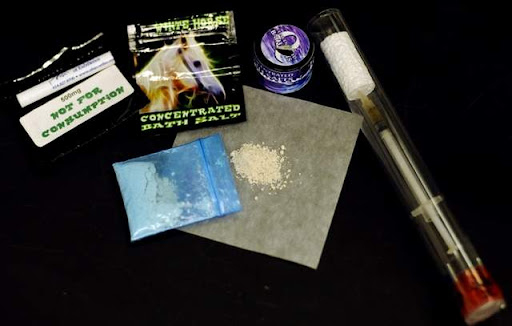
Thursday, 15 September 2011

Facebook May Help Online Luxury-Goods Sales Grow 20% Annually


Online sales of luxury goods may climb 20 percent a year by 2015 as producers build networks of potential customers on social media websites such as Facebook.com, according to a study published today. Revenue from fashion, jewelry and other luxury products is likely to reach 11 billion euros ($15 billion) in four years, the report from Italian luxury trade group Altagamma shows. “The explosion of social media and the increasing investments in the online channel by luxury companies has reinforced and enlarged the community of those who explore, comment upon and eventually purchase luxury goods,” Milan-based Altagamma said in a statement. Luxury companies are more than doubling their “friends” on Facebook annually in recognition of the link between online and offline purchases, according to the report. At least half of consumers in Europe, the U.S. and China form an opinion or seek information online before buying in a store, while most online luxury sales are preceded by a boutique visit, Altagamma said. Burberry Group Plc (BRBY), the U.K.’s largest luxury goods maker, gets “the most reach and most response” from digital initiatives compared with other media, Burberry Chief Financial Officer Stacey Cartwright told analysts on July 13. To promote the Burberry Body fragrance, which hit shelves this month, the London-based company offered exclusive samples to its nearly 7 million Facebook fans. It received more than 225,000 requests in little more than a week. The Internet plays a key role in increasing the hype around luxury brands and their products, Altagamma said. Fashion Blogs The web’s influence on perceptions of luxury goods is strongest in China, where fashion blogs are the source of opinion for 58 percent of consumers, compared with 27 percent of their counterparts in Europe and the U.S., the report said. The Asian country also has a higher penetration of online purchasing. Seventy-eight percent of Chinese buy luxury goods online, compared with 56 percent of Europeans and 46 percent of Americans, “mainly because they wish to avoid interactions with sales personnel or their insistence,” Altagamma said. The study included surveys of 187 companies with total revenue of 60 billion euros ($82.1 billion), interviews with 1,500 consumers and analysis of 450 websites in seven countries.

UBS hit by $2bn rogue trade


Matthew Czepliewicz, an analyst at Collins Stewart, said the unauthorised loss cuts his 2011 earnings-per-share estimate for UBS by about 30pc - "a huge hit". He continued: "A loss of this magnitude will very likely have occurred in the FICC (Fixed Incomes, Currencies and Commodities) division, the very division UBS has been systematically rebuilding after shrinking it by 40pc during the credit crisis. That an unauthorised position of this size could have escaped oversight will renew pressure on management to radically scale back the FICC business, a volatile and capital-intensive business overall." He said that his upgrade of UBS to "buy" from "hold" on September 6 "now looks memorable, to say the least", but added: "As large and embarrassing as the loss is, it may in fact drive a positive strategic overhaul of the company. In the meantime, we await further detail on what went wrong and how management will respond." Andrew Lim, analyst at Espirito Santo, said the loss was manageable at group level at UBS. He added: "The $2 billion loss compares to our current estimate for the (third-quarter) group net earnings of 1.1 billion Swiss francs and (full-year estimated) net earnings of 5.1 billion Swiss francs. "The loss is therefore manageable at the group level, but is obviously not helpful for sentiment and confidence in the bank's risk management following the near-death experience of 2008/9." Fiona Swaffield, analyst at RBC, put the loss in context: "Assuming the loss is not revised at CHF1.7bn this is 3.4% of tangible book value end Q2 2011 and CHF0.35ps. Relative to target Basel III risk weighted assets of CHF300bn this is some 44bp. UBS on the most conservative measure has core T1 of 10% forecast end 2012 Basel III pre this and 13% with phased=in deductions. This would fall to 9.8% and 12.4%, respectively, so still respectable and above CS (8.8% on look through Basel III end 2012) but obviously hardly a positive as its strong capital base relative was an attraction." But she added the real issue over and above the financial impact is the reflection on risk management at UBS: "UBS was seen to have recovered significantly from the credit crisis and to have improved its risk management in the investment bank in spite of its struggle to improve returns. This obviously brings this very much into question." Goldman Sachs analysts Jernei Omahen and Peter Skoog wrote in a note: "This loss has the scope to have a material impact on the perception of UBS' private bank, impacting its future operating trends. "Today's announcement therefore adds to the long list of arguments (and pressure) for a substantially smaller investment bank." Louise Cooper, markets analyst at BGC Partners, said: "According to Bloomberg analysts were forecasting about a SFR 7bn or approx £5bn pre tax profit for UBS for the 2011, therefore a £1.3bn trading loss hits full year earnings by about a third." She added: "The jewel in the crown of UBS is its private banking business, producing consistent, quality earnings. An unexpected trading loss could do significant reputational damage to the bank especially given its track record during the crisis (massive recapitalisation and regulatory fines). Rich people tend not to want to do business with a bank where there are questions over risk control. UBS needs to do a good job in explaining what went wrong and assuring its clients that it will not affect them." Joshua Raymond, chief market strategist at City Index, commented: "Whilst the incredible volatility seen recently in the markets would have likely seen some traders lose and win big, the news that a rogue trader was allowed to stack up losses of $2bn will inevitably send nervous shockwaves through to those investors who have only just returned to the bank after a severe loss of confidence. "The Swiss firm has fought hard in the last few years to restore its credibility from having to be bailed out by the Swiss authorities, suffering a large fine for tax evasion and after it agreed to disclose the accounts of thousands of its clients to US tax authorities."

Fury over 'link' of drug arrests to Jodie's death


SPANISH police investigating the circumstances surrounding Jodie Nieman's death made nine arrests last week. Although police are certain the Kenley beautician died from a heart attack, it is not clear whether her death was drug-related. ​ MISSED: Jodie Nieman An investigation has been launched into drugs supply in Ibiza and police announced last Thursday that they had arrested nine men after seizing cocaine, thousands of ecstasy pills, steroids and laboratory equipment. One of the men is from Croydon but it is not suggested Ms Nieman, who died just days before her 20th birthday on July 15, knew him. The former nail technician's mother Debbie, of Waterbourne Way, Kenley, said she was "disappointed and angry" Spanish police had linked the arrests with her daughter. She said: "We still don't know if Jodie took any pills. The doctor in Ibiza said they weren't told she had taken any tablets. "Until we have results saying she took any drugs, we just don't know and it is upsetting because we are still waiting on tests." Spanish police said most of the pills found are known as Pink Rock Star, similar to those thought to have caused the death of Ms Nieman and the poisoning of others in July, officers added. The UK's Serious Organised Crime Agency took part in the operation against a mostly-British gang which travelled to Ibiza to feed the demand from the summer influx of clubbers. Detectives arrested five British men, including a 39-year-old from Croydon, three from Ireland and one from Poland. They were being questioned by officers from the Guardia Civil on suspicion of various drugs offences. The former Riddlesdown student was just three days into her holiday when she had a heart attack on a night out at the Space club in the Playa d'en Bossa resort. The teenager's funeral took place at Croydon Crematorium on August 16. Mum Debbie said her 19-year-old daughter was a "stylish princess" who would defend her friends to the end. Ms Nieman added: "She had champagne on the plane over and it came in a plastic glass – Jodie just said: 'Who has champagne in a plastic glass?' "That was just Jodie. Every day another person tells me they knew Jodie and they went to the funeral. I didn't know she was so loved."

Three New Brunswick Smoke Shops Raided in "Bath Salts" Bust, Six People Arrested


Middlesex County Prosecutor's Office has announced that three smoke shops in New Brunswick and a gas station in East Brunswick were raided and charged in the sale of illegal drugs. According to the Prosecutor's Office, the raids began on Aug. 2 after four months of investigative work and netted the following arrests: Jarnail Sandhu, 25, of Sayreville, owner of the Shell gas station located at 1010 Route 18 in East Brunswick, was arrested and charged with distribution of bath salts and synthetic marijuana; possession of bath salts and synthetic marijuana and possession of drug paraphernalia. He was jailed with bail set at $100,000, with no 10 percent option. Sandhu's mother, Charanjit K. Sandhu, 56, of Nanuet, N.Y., was also arrested and released on her own recognizance. She faces the same charges as her son. Ayman S. Al-Nsairat, 40, of East Brunswick, owner of the Amsterdam Smoke Shop, 29 Easton Ave. in New Brunswick. He was charged with possession of toxic chemicals and possession of drug paraphernalia, and was released on his own recognizance. Maria M. Almanzar, 20, of Union City at the Amsterdam Smoke Shop. She was charged with possession of toxic chemicals and possession of drug paraphernalia, and distribution of toxic chemicals, and was released on her own recognizance. Lukasz M. Poplawski, 21, of Staten Island, N.Y. at the Amsterdam Smoke Shop. He was charged with possession of toxic chemicals and possession of drug paraphernalia, and distribution of toxic chemicals, and was released on his own recognizance. Ranmanjeet K. Dhillon, 24, of Woodbridge, at the Jamaican Discount Smoke Shop at 38-A Easton Ave. in New Brunswick. Dhillon was charged with possession and distribution of toxic chemicals and possession of drug paraphernalia, and was released on her own recognizance. Additionally, the Jamaican Smoke Shop at 40 Easton Ave. in New Brunswick was also raided, and "Some illegal substances and drug paraphernalia were seized," according to the Prosecutor's office. No arrests were made at that location. Bath Salts are mix of chemicals that mimic the effects of cocaine and methamphetamines and were banned earlier this year. 6,547 bags, jars and vials containing synthetic marijuana and bath salts were also seized by police during the investigation, marked for sale for between $20 to $30 each, according to the Prosecutor's Office. Police also seized 2,914 pipes, bongs and hookahs, 193 digital scales, 357 canisters containing nitrous oxide, 13 imitation handguns used to fire blanks, and 46 containers designed to conceal illicit drugs, according to the Prosecutor's Office. Packaging material, grinders, cigars and rolling papers, "All identified as products used to prepare and help sell the illicit drugs," according to the Prosecutor's Office. $25,145 in cash from the sales of the illegal drugs was also seized. More than $163,000 in synthetic Marijuana and bath salts were seized. Members of the Middlesex County Prosecutor’s Gangs, Guns and Drugs Task Force are handling the investigation, assisted by police in New Brunswick, East Brunswick and Sayreville, according to the Prosecutor's Office

Recent Comment

Related Posts Plugin for WordPress, Blogger...